Recently a major study analyzing more than 500 languages was published in the Proceedings of the National Academy of Sciences supporting the theory. The study, co-authored by Dr. Quentin Atkinson, of Auckland University, and Dr. Mark Pagel, of the University of Reading, U.K., concludes that there is evidence for a single origin of language.

This chance event set off in Mozeson a train of thought that would consume him for the next 35 years as he came to believe—and set out to prove—that Hebrew was the root of all languages. The lack of approval from the linguistics establishment did not dampen Mozeson’s enthusiasm for his theory, and he went on to publish two books on the subject. The Word: The Dictionary That Reveals the Hebrew Roots of English (1989), a 300-page book with some 20,000 English-Hebrew linked words, and The Origin of Speeches (2006), in which words from multiple languages are connected to Hebrew.
Mozeson has stated that “New evidences forces new perceptions,” and that Edenics data is very new, it’s the tip of a large iceberg. He has put out three CDs and a website, a blog, and all sorts of social media. The whole operation runs on a shoe-string budget, some part of which Mozeson claims is provided by co-founder of Skype and Kazaa, Kevin Bermeister, who is listed as a supporter of Edenics—which is the tracing of English and world words to the Semitic Mother Tongue attested in Biblical Hebrew.
Ironically, for a man who seeks to revolutionize our understanding of language, Mozeson himself has a severe speech impediment. This incurred during a five-day coma and massive organ failure that he suffered following severe heat stroke in 1996. Yet Mozeson has succeeded in gathering a cadre of dozens of like-minded individuals, from all over the world and from a wide variety of languages and traditions. All of them believe in the Edenics theory and spend time searching out and publicizing what they believe are the Hebrew roots of their native tongues. Overall he and his team claim to have mapped out the Hebrew roots to more than 60,000 words from dozens of languages.
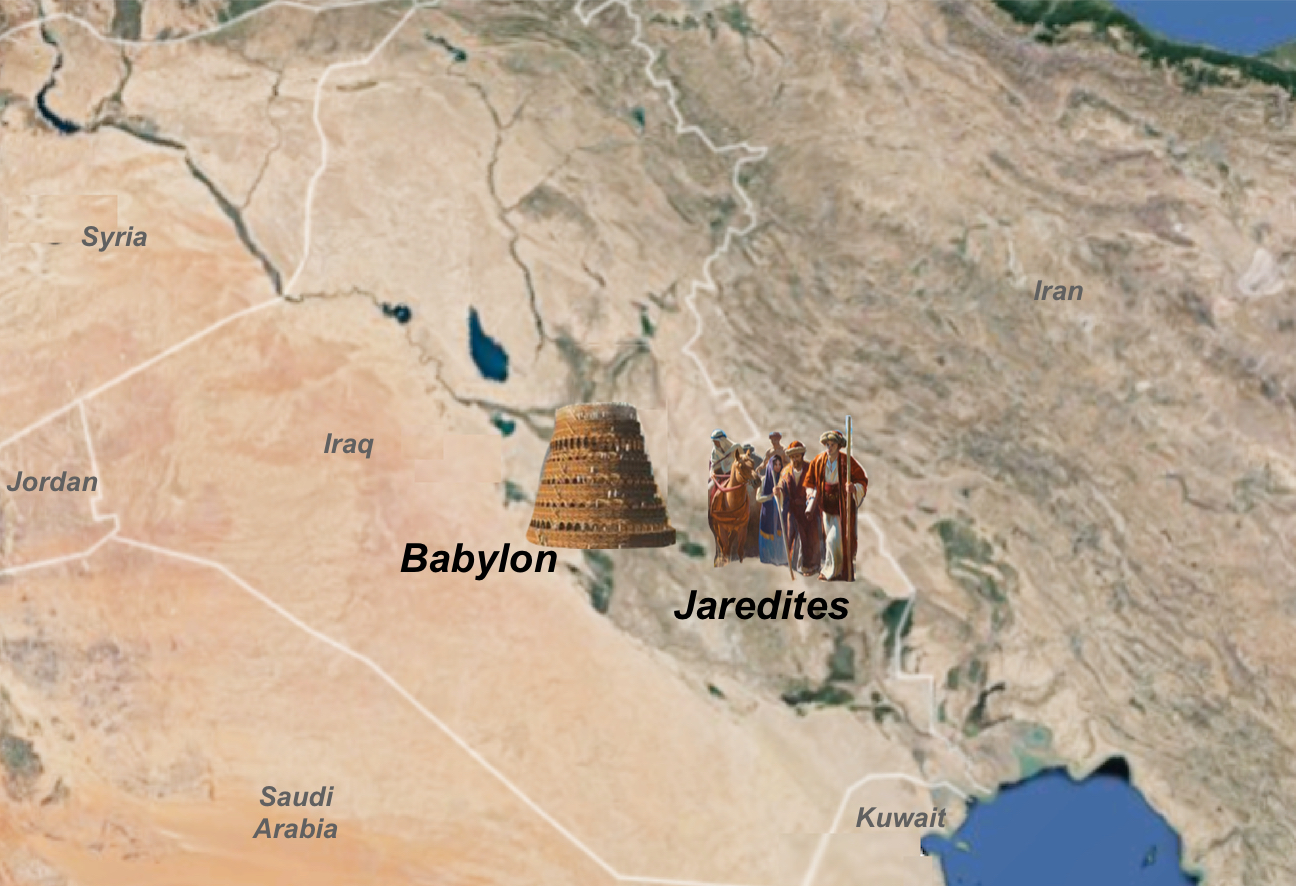
Whether or not Edenics is accurate or just another view of a simple concept, we should keep in mind that the Lord told us through Moses that: “And the whole earth was of one language, and of one speech,” (Genesis 11:1), and also, “And the Lord said, Behold, the people is one, and they have all one language” (Genesis 11:60). Obviously, there was a time in the beginning where everyone had just one language, and the Lord confounded that language (Genesis 11:7) and Moses tells us: the Lord did there confound the language of all the earth” (Genesis 11:9).

“Edenics,” he added, “works via word roots that are found over and over again in different words with similar connotations. For instance, the Hebrew word for counting is MoNeh. The Mem-Nun (M-N) sub-root found here makes up a large word family, from every language, dealing with a MouNts. This includes MaMoN: MoNey; HaMoN: MaNy; the Hebrew word MiNyan and the English words MiNus; DiMiNish; NuMber and MiNi.”
Mozeson also expands his theory into other languages. “The Hebrew word DeRech (way/road),” he said, “with its DR root, is also found in DaRoga (Russian), DeRecho (Spanish), DuRch (German) and DoRo (Japanese). By the way, if you take the DR root of DeRech and reverse its order you get the English word RoaD. Can you see the Hebrew root from ShoMeR (guardian) in the Japanese word SaMuRai (the emperor’s royal guard)?”
According to Hezy Laing, a journalist in Jerusalem, “Finding relationships between similarly sounding words seems to be too easy for Mozeson. The real challenge for him is proving connectivity between words that at first glance appear to be completely different. He does this via some common phonetic techniques, despite his lack of official linguistic training.”

(See the next post, “Jaredites and their Language-Part III,” for more information on the language of the Jaredites and its possible connection to the language of the Hebrews)